TokenSquare KRWQ Launch
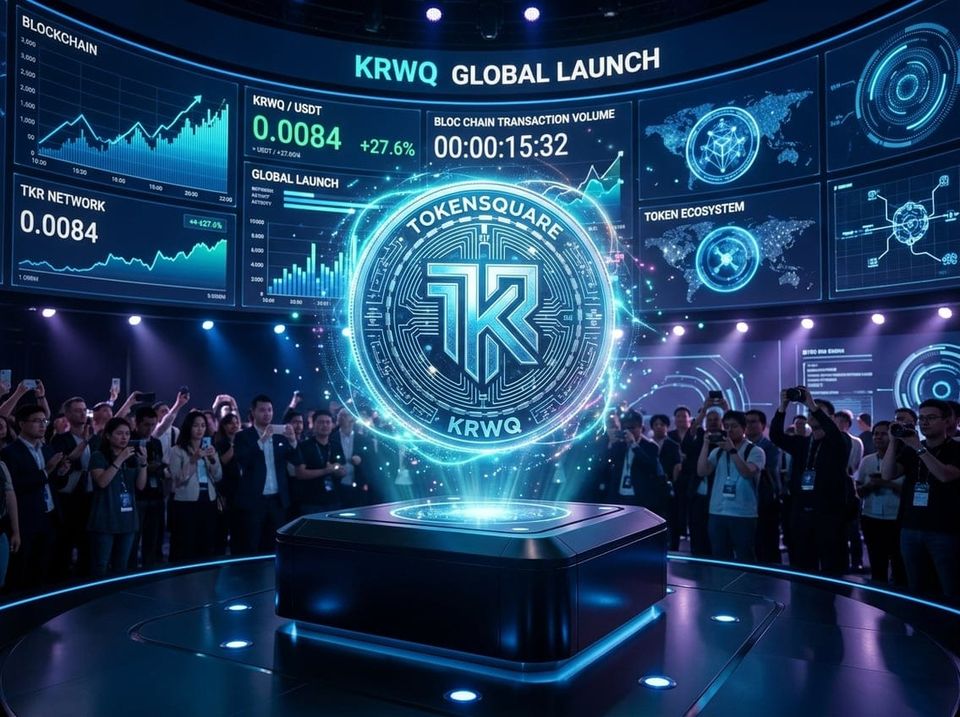
South Korea's digital payment space just got a shake-up. TokenSquare has launched KRWQ, a won-backed stablecoin infrastructure on the BSV blockchain, aiming for real-time payments and enterprise settlement using digital won rails.
This move connects traditional finance with blockchain tech in one of Asia’s most tech-forward economies.
Transforming South Korea’s Digital Payments and Global Stablecoin Landscape
The KRWQ stablecoin infrastructure comes from a partnership between TokenSquare and the Switzerland-based BSV Association. They signed a Memorandum of Understanding in June 2025, then spent months on technical checks and compliance before the public launch in May 2026.
KRWQ is pegged 1:1 to the South Korean won. The goal? Fast transaction speeds and low fees for daily use.
Here’s the twist: Two stablecoins now share the KRWQ name, but they serve different purposes in Korea’s digital currency race. TokenSquare’s KRWQ is all about domestic payments and integrating with real-world transactions. Meanwhile, another KRWQ from IQ/Frax Finance targets trading and hedging.
This double-barreled approach could change how stablecoins get adopted in regulated markets. It’s a bit odd, but maybe it’s the future?
Key Takeaways
- KRWQ is a won-backed stablecoin on BSV blockchain for real-time payments in South Korea.
- TokenSquare and the BSV Association teamed up to create a compliant stablecoin system after technical and regulatory checks.
- Two KRWQ stablecoins exist - one for payments, one for trading.
Core Architecture and Technology Behind KRWQ

TokenSquare built KRWQ on BSV blockchain tech to handle lots of payments at low cost. The system relies on advanced nodes and transparent reserve verification for stability and security.
BSV Blockchain Integration and Teranode Architecture
TokenSquare worked with the BSV Association to build KRWQ on BSV's Teranode architecture. This setup is made for speed and can process up to a million transactions per second.
With Teranode, KRWQ acts as payment infrastructure for real-time payments, micropayments, and enterprise settlement. Transaction speeds here leave traditional systems in the dust.
BSV’s blockchain keeps transaction costs low. That makes KRWQ actually usable for small, everyday payments - something other blockchains often struggle with.
Node Operation Structure and Decentralization
KRWQ node operation structure delivers reliability even with high transaction volumes. TokenSquare runs nodes that validate transactions and keep the blockchain ledger up to date.
Businesses get a system ready for heavy-duty transaction loads, like vendor payouts and internal transfers. The network structure focuses on throughput, not old-school proof-of-work decentralization.
This means payments finish in seconds, not minutes or hours. Pretty handy if you’re in a rush.
Reserve Attestation and Security Protocols
KRWQ keeps its 1:1 peg to the Korean won with transparent reserve management. The system publishes reserve data so anyone can verify every KRWQ token is backed by real won.
Security audits and technical checks protect funds and keep the platform solid. They even run stress tests to make sure the system can handle big spikes in activity.
You can check the reserve ratio and total supply at any time. That real-time visibility helps keep trust in the stablecoin collateralization.
Compliance and Regulatory Landscape

TokenSquare designed KRWQ with control systems like identity checks and transaction monitoring. But South Korea’s regulatory framework is still pretty murky for won-backed digital currencies.
KYC/AML Enforcement and Address Controls
It is reported that KRWQ has a control layer with KYC/AML, freeze and hold functions to meet anti-money laundering rules. These address controls let the platform monitor activity and step in if needed.
The system checks your identity before you can use the payment rails. This makes the stablecoin more attractive to banks and traditional finance players.
TokenSquare also signed a custody agreement with KODA to boost compliance. They’re running proof-of-concept tests with major banks to show how the controls work in practice.
Digital Asset Basic Act and Policy Uncertainty
South Korea is still figuring out its rules for stablecoins and digital assets. Lawmakers are working on a digital asset basic act, but the final rules are up in the air.
This policy gap affects how you use KRWQ and similar platforms. TokenSquare launched now to get ahead of expected regulations, but the legal environment keeps shifting.
The May 2026 launch was a calculated move to set up infrastructure before new laws hit. Still, future regulations could change how KRWQ operates or what services it can offer.
Central Bank and Regulator Roles
The Bank of Korea and Financial Services Commission will decide how KRWQ and other stablecoins fit into the country’s financial system. These agencies get to say whether private stablecoins can work alongside - or compete with - government digital currency projects.
The BSV Association provides blockchain infrastructure and regulatory guidance for launching a compliant stablecoin. Whether you can use KRWQ for payments depends a lot on how regulators view won-backed digital currency.
TokenSquare approach signals they expect oversight, not outright bans. They’re trying to play ball with regulators and financial institutions.
Use Cases and Payment Integration
KRWQ is built for large-scale real-time payments, micropayments and enterprise settlements. The infrastructure supports over a million Transactions Per Second (TPS) with zero user gas fees and one-second settlement times for real-world deployment.
Real-Time Payments and Micropayments
You can process payments instantly with KRWQ - no more waiting for traditional banks to catch up. The platform settles transactions in about a second, which is perfect for busy retail spots.
Micro transactions are easy too, thanks to zero user fees. You don’t need to hold extra crypto just to cover transaction costs.
TokenSquare AI payment platform makes this possible through merchant integrations and wallet SDKs. The system is built to handle a million-plus transactions per second, so scaling isn’t an issue.
E-Commerce and Enterprise Settlement
Businesses can plug into KRWQ via B2B APIs built for enterprise use. The won-backed stablecoin infrastructure keeps a 1:1 peg for predictable pricing.
E-commerce platforms get built-in compliance features like KYC/AML checks, freeze, and hold functions. These help meet regulatory demands.
TokenSquare’s deals with KODA for custody and its proof-of-concept work with banks are setting the stage for broader adoption across Korea’s financial sector.
Cross-Border Remittances and DeFi Applications
You can use KRWQ for cross-border money transfers over blockchain rails, skipping the old correspondent banking networks. BSV’s blockchain gives the global network needed for this.
The platform even supports IoT and machine-to-machine payments for automated scenarios. This isn’t just about people sending money—machines can do it too.
KRWQ is positioned mainly as a payments infrastructure, not a speculative asset. Still, the tech can support various DeFi applications if the market wants it.
Market Context and Stablecoin Ecosystem
South Korea’s digital asset scene now has several won-denominated stablecoins vying for market share. Two KRWQ stablecoins popped up at the same time, showing just how fast the market’s moving—sometimes faster than regulators can keep up.
Domestic Stablecoin Competition and Adoption
You’ll find two KRWQ projects in Korea’s stablecoin world. TokenSquare’s runs on BSV and focuses on payments. The other, from IQ and Frax Finance, is already trading as an institutional won stablecoin.
This competition shows how quickly stablecoins are catching on in Korea. Companies are racing to offer won exposure via blockchain, even as regulators scramble to write the rules.
Each project has its own angle. TokenSquare leans into AI-powered payments for daily use. IQ-Frax is all about institutional trading.
KRWQ for Trading Versus Payments
It’s important to know these stablecoins serve different needs. TokenSquare’s KRWQ is built for real-world payments in Korea, connecting old-school finance with blockchain through compliant, won-backed transactions.
The IQ-Frax KRWQ is for trading and already trades on platforms like EDX Markets. It’s geared toward crypto trading pairs and institutional settlement.
This split highlights how won stablecoins can serve both payment and trading markets. Payment coins need merchant adoption and infrastructure; trading coins need liquidity and exchange access.
FIAT-Backed and Non-USD Stablecoins
Both KRWQ versions are fiat-backed and pegged to the Korean won, not the US dollar. That gives users direct won exposure - no need to convert through USD.
Non-USD stablecoins like these help with local needs. You skip currency conversion fees and avoid exchange rate headaches when using won-backed tokens in Korea.
Fiat-backed models require careful reserve management and tight compliance. The upside? Users get price stability tied to the won, making these tokens useful for both commerce and trading.
Commercial Rollout and Strategic Partnerships
TokenSquare’s KRWQ stablecoin infrastructure entered the South Korean market with a phased rollout. They’re working on merchant integration, technical partnerships, and specialized custody deals. The BSV Association partnership underpins the blockchain foundation for real-time payments and enterprise settlements.
Integration with Merchants, AI Payment Platforms, and Mobile
KRWQ is built with real-world payments in mind, especially for the Korean market. The system zeroes in on real-time payments, micropayments, and enterprise settlements.
TokenSquare designed this as an AI-driven payment platform using digital won rails. This means you can make transactions without waiting for traditional banks to clear them.
Commercialization plans aim to link the stablecoin setup with existing merchant networks. KRWQ lets you handle small payments that would normally be too expensive with old-school payment methods.
Mobile integration sits at the heart of the rollout. You can pay through digital channels while keeping the value tied to the Korean won.
TokenSquare and BSV Association Collaboration
TokenSquare and the BSV Association in Switzerland kicked things off with a formal MOU in June 2025. Since then, they've worked together on technical checks and node operations.
The core of this collaboration is building KRWQ on BSV blockchain tech. This setup aims to support high-volume payment activity in Korea, according to both organizations.
The BSV Association lays out the tech framework, and TokenSquare brings it to the Korean market. Together, they’ve outlined commercialization plans for the stablecoin.
They put the system through technical tests to make sure it can handle large-scale digital asset transactions in Korea.
Custody, Reserve Management, and Technical Partners
KRWQ backbone relies on special arrangements for holding the Korean won reserves behind each token. Custody solutions are there to protect the assets backing every digital won.
Reserve management keeps each KRWQ token pegged to the won. This means they hold enough won deposits to cover all circulating tokens.
Technical partners help run the network nodes that process and record payments. The system uses several nodes to verify transactions and keep things moving.
Custody and payment processing stay separate to lower risk. This setup gives you extra peace of mind about your digital won, at least in theory.
Implications for Global Data Utility and the Future
KRWQ could shake up how Korean won travels across borders and digital platforms. Whether it becomes a regional payments staple or a global model depends on how well it scales and how many businesses jump in, as reported by project partners.
International Remittance and Interoperability
South Korea sends billions in remittances each year, and KRWQ might speed up settlement compared to slow, bank-based transfers. If you’ve ever sent money abroad, you know the headaches - delays, extra fees, and lots of middlemen.
TokenSquare plans to expand KRWQ into other Asian markets. That’ll mean connecting with other payment systems and stablecoins, which isn’t exactly a walk in the park.
The platform is built to add more fiat-backed stablecoins down the line. You could see different currency pairs on the same network, which might smooth out regional trade and remittance.
Network Scalability for Data and Financial Services
BSV Teranode reportedly hit over one million transactions per second in tests. That is a big deal if you’re thinking about micro payments, machine-to-machine trades or rapid-fire data swaps.
KRWQ infrastructure is not just for moving money. It could handle heavy transaction data in real time, which matters for supply chains and automated device payments.
But those numbers come from tests, not the real world. We need to see if it holds up when millions of actual users in Korea start putting it to work.
Potential for Enterprise, Institutional and AI-Driven Payments
TokenSquare sees KRWQ as more than just a consumer tool - it is for enterprise settlements and AI payments too. Businesses may find faster invoice processing and lower costs compared to old-school banks.
The separate KRWQ from IQ and Frax Finance on EDX Markets targets institutional trading and futures. That version is for traders who need Korean won exposure for hedging.
TokenSquare added compliance tools like KYC and AML checks, plus address controls. Those features could make it more attractive to institutions that need to follow strict rules and track funds, according to company statements.
Opportunities and Considerations for Investors
KRWQ offers a shot at won exposure and stablecoin adoption in South Korea. Whether it succeeds depends on market demand, tech reliability and how regulators react.
Speculative Potential of KRWQ and Market Demand
It is worth weighing KRWQ potential against Korea payment needs. TokenSquare built KRWQ for large-scale, real-time payments, aiming at AI payments, micro payments and enterprise settlements.
Adoption will show if KRWQ can move past its launch phase. The focus on digital commerce, not just being another crypto asset, could appeal to businesses looking for won based options.
But do not ignore the competition - there are two KRWQ projects in South Korea, which might split the market or confuse users, as reported by local outlets.
Stablecoin Exposure in the South Korean Market
KRWQ lets you tap into South Korea’s digital payments without holding won directly. That’s a different way to access the blockchain-driven payment scene.
TokenSquare’s partnership with the BSV Association brought BSV technology to Korea. They kicked things off with an MOU in June 2025 and moved through technical development after that.
Adoption in South Korea will hinge on how many businesses actually use KRWQ for settlement and whether it can handle real-world transaction loads. That is something investors and users will want to watch closely.
Risk Management and Regulatory Oversight
Security audits and stress testing are still absolutely critical for stablecoin infrastructure. It is worth asking whether KRWQ actually goes through regular security reviews and how the system holds up under heavy transaction loads when things get busy.
Regulatory oversight in South Korea will keep shaping KRWQ operational framework. Any risk management strategy has to consider possible regulatory changes, reserve requirements and compliance standards in the Korean market.
Member discussion