The Daily Drop — Wednesday, 2 July 2026
The Block Drop
The Daily Drop
Wednesday, 2 July 2026 • UTC Edition • Chain ~956,040 • Issue #44
Today's Snapshot
- nChain UK wins Employment Tribunal: whistleblowing allegations against the BSV-focused blockchain company ruled "entirely without substance"
- CLARITY Act stalls in US Senate — crypto market structure legislation needs 60 votes with only ~20 sitting days before August recess
- BSV chain delivers a standout block on 1 July: #955,920 packed 9,064 transactions, with the day opening at ~16 MB in block #955,885
nChain UK Wins Employment Tribunal in Whistleblowing Case
A London Employment Tribunal has dismissed whistleblowing claims brought by two former senior nChain UK executives, ruling the allegations were "absurd" and "entirely without substance." The ruling, handed down on 1 July 2026, is a significant legal vindication for nChain.
The claimants — David Brookes, former Group General Counsel, and Andrew Moody, former Group Chief Financial Officer — alleged they were unfairly dismissed for making protected disclosures about a summer 2023 refinancing deal. The tribunal found neither executive had made valid protected disclosures under UK whistleblowing law.
The pair were actually dismissed in November 2023 following their involvement in an aggressive incident at nChain's offices on 27 September 2023. The tribunal found both men participated in gross misconduct and that the company's decision to terminate their employment was legitimate.
Why it matters: nChain is the primary intellectual property and research arm behind BSV development. Legal disputes that cloud its operations or reputation can affect confidence in the broader BSV ecosystem. This decisive ruling removes a significant distraction and reinforces nChain's standing as a credible institutional actor at a critical moment in BSV's enterprise expansion.
CLARITY Act: US Crypto Market Structure Bill Faces Uphill Battle
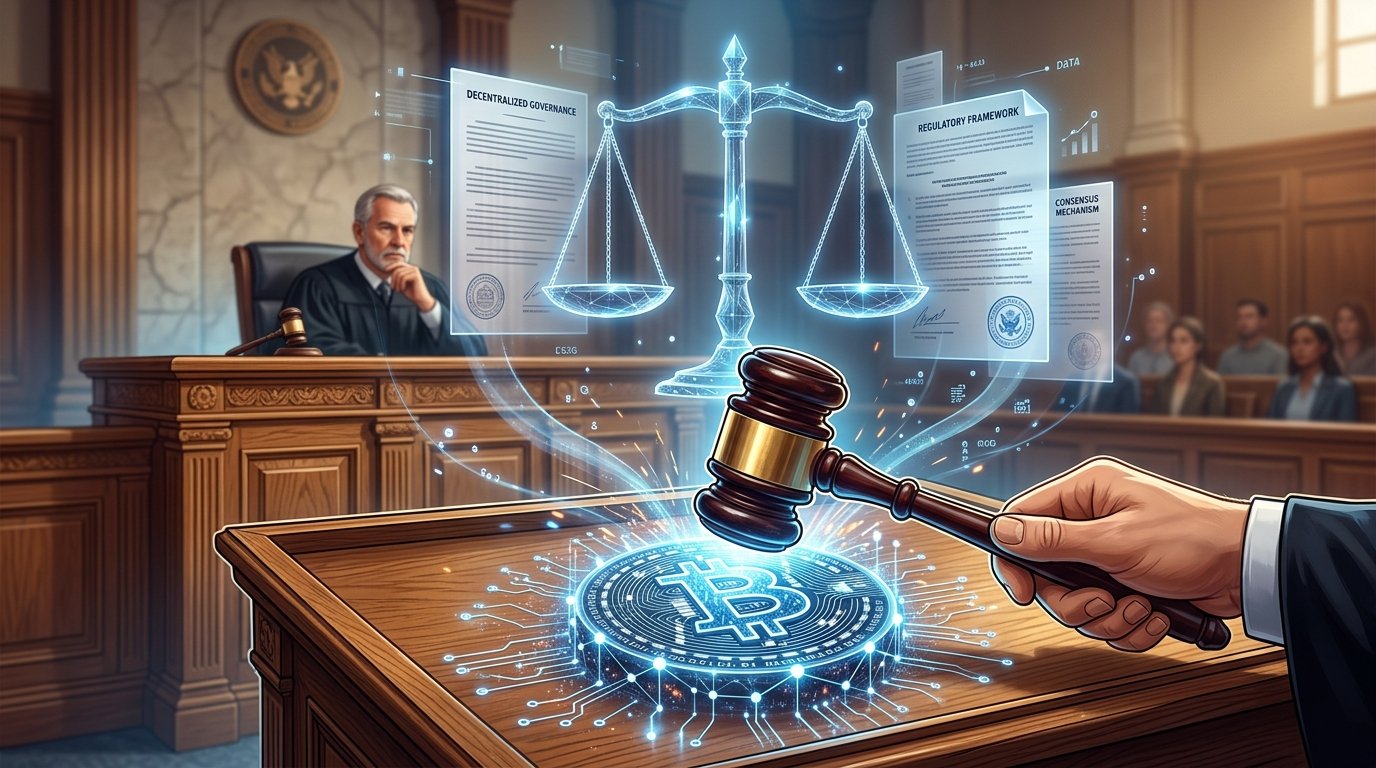
The CLARITY Act — a wide-ranging Senate bill that would establish federal regulatory frameworks for digital assets — is stalled in Washington, with Senate watchers calling its prospects a "coin flip" at best.
The legislation covers stablecoin oversight, liability protections for decentralised finance developers, and restrictions preventing government officials from profiting on crypto holdings. Despite months of behind-the-scenes negotiations, key sticking points remain unresolved.
The bill needs 60 votes to advance past a Senate filibuster — all 53 Republicans plus at least seven Democrats. Senate Majority Leader John Thune has signalled willingness to bring it to a vote after 13 July, but only around 20 sitting days remain before the August 8 recess. Failure to pass before recess could delay the legislation to next year or beyond.
Why it matters: Regulatory clarity is the single biggest unlock for enterprise blockchain adoption in the US. BSV's value proposition — rule-of-law compliant, scalable, fixed-protocol — is uniquely positioned to benefit if a coherent legal framework emerges. Conversely, ongoing regulatory ambiguity pushes cautious enterprises to the sidelines. The fate of CLARITY will shape how aggressively US institutions can engage with blockchain infrastructure through the rest of 2026.
Data covers a sample of 10 blocks mined on 1 July 2026 UTC (blocks 955,885–956,025). BSV block times vary; this is a representative cross-section, not every block in the day.
| Height | Time (UTC) | Txs | Size (MB) |
|---|---|---|---|
| 955,885 | 00:05 | 6,489 | 15.96 |
| 955,900 | 02:01 | 1,917 | 0.58 |
| 955,920 | 04:55 | 9,064 | 9.47 |
| 955,940 | 07:50 | 2 | 0.00 |
| 955,960 | 10:46 | 7 | 0.22 |
| 955,975 | 14:00 | 12 | 0.02 |
| 955,990 | 17:07 | 11 | 0.00 |
| 956,005 | 18:39 | 27 | 0.28 |
| 956,015 | 21:01 | 3,500 | 0.90 |
| 956,025 | 22:42 | 562 | 0.26 |
- 10 blocks sampled across 1 July UTC — spanning 00:05 to 22:42 UTC
- Combined sample volume: 22,250 transactions
- Peak transaction block: #955,920 with 9,064 txs (04:55 UTC)
- Largest block by size: #955,885 at ~16.0 MB (opening the day at 00:05 UTC)
- Lightest period: mid-day blocks in the 07:50–18:39 UTC window show reduced activity — a common BSV rhythm
Standout block: #955,920 at 04:55 UTC carried 9,064 transactions across 9.47 MB — nearly 10× the next-busiest sampled block and a signal of genuine utility traffic on the network.
Legal Clarity and Legislative Gridlock: What They Mean for BSV
Two seemingly unrelated stories from 1 July — a London employment tribunal ruling and a Washington legislative standoff — both trace back to the same underlying challenge facing BSV and the broader blockchain industry: institutional trust requires legal certainty.
The nChain tribunal victory matters beyond the immediate parties. nChain holds the bulk of BSV's enterprise-grade IP portfolio and drives the protocol's long-term development roadmap. When former insiders launch high-profile legal claims — even ones ultimately dismissed as "entirely without substance" — the reputational noise creates friction for enterprise procurement teams evaluating BSV. This ruling cuts that friction. It signals that nChain's internal governance was sound and that its leadership acted within legal bounds when it removed disruptive executives.
The CLARITY Act picture is more complex. The bill is genuinely important — it would create the first coherent US federal framework covering both stablecoins and on-chain application liability. But the politics are difficult. Seven Senate Democrats must cross the aisle, and the ethics provisions (restricting officials' crypto holdings) remain a flashpoint. If the bill dies before the August recess, the practical effect is at least 12–18 months of continued uncertainty for any company trying to build a US-regulated blockchain product.
For BSV, the status quo of regulatory ambiguity is a mixed picture. On one hand, BSV's design philosophy — fixed protocol, law-enforcement compatibility, immutable ledger — puts it ahead of most rivals in any future compliance regime. On the other hand, without a formal framework, US enterprise customers face internal compliance review hurdles that slow or block blockchain pilots. Every month the CLARITY Act is delayed is a month BSV’s US pipeline moves more slowly.
Risks to Watch
- CLARITY Act failure: if the bill misses the window before August 8 recess, momentum could stall until 2027 — materially delaying US institutional adoption
- nChain IP exposure: the tribunal ruling closes this case, but ongoing IP litigation in other jurisdictions remains a background risk for BSV development continuity
- BSV transaction volume concentration: the 1 July sample shows heavy clustering in two early-morning blocks — if this reflects batch processing rather than organic volume, it warrants monitoring
- Senate political dynamics: the ethics language in CLARITY is a genuine sticking point — any deterioration in bipartisan relations before July 13 could kill the bill outright
What to Watch
- Institutional Tokenisation Summit, London — 7 July 2026: Major tokenisation event convening banks, asset managers, and blockchain providers. Watch for BSV mentions and enterprise announcements.
- CLARITY Act Senate vote window — after 13 July: Senate Majority Leader Thune signalled a potential floor vote after this date. Watch for whip counts and whether Democrats close the gap to 60.
- August 8 US Senate recess deadline: If CLARITY doesn't pass before recess, the legislative calendar resets — potentially no crypto market structure bill until 2027.
- nChain follow-up: With the tribunal resolved, watch for nChain to accelerate BSV enterprise announcements or IP licensing deals in H2 2026.
- BSV transaction volume patterns: Block #955,920's 9,064 transaction spike warrants follow-up — is this a protocol-level application batching transactions or new organic user activity?
Member discussion